The Benefits of Pavers
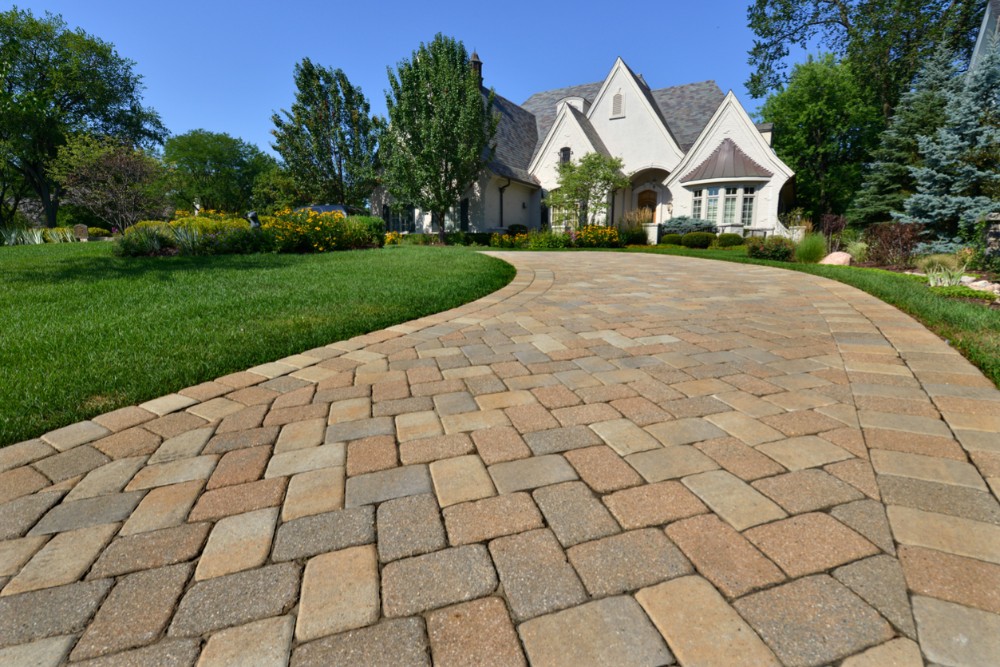
Pavers are often used for patios, walkways, and driveways, and installing them does more than just add a nice visual.
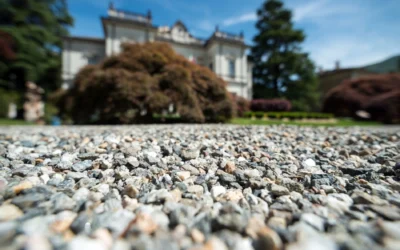
When you add pavers to your property, either for practical or aesthetic purposes, use gravel as the base to create a solid foundation.
Pavers keep gravel from shuffling and migrating around your property. They also help quell weed growth and make general property maintenance easier. When the gravel under pavers is laid at least 4 inches thick from the ground, unwanted weeds will not be able to grow out of the gravel.
Depending on the purpose of the pavers (patios, walkways, or driveways), the amount of foundational gravel needed will vary. In this blog post, we’ll break down how much gravel under pavers is recommended for each project.
Gravel Under Pavers for Walkways and Patios
When constructing gravel walkways and patios, the weight and frequency of the traffic for the area will help determine the right amount of gravel. Generally speaking, people and pets walking on the pavers, as well as the weight of patio furniture, will guide the gravel proportions.
Dense grade aggregate is a common choice for walkways and patios. When constructing a dense grade base you’ll need to dig out about five to six inches of soil. Next, lay landscaping fabric and fill in the foundation with 2 inches of coarsely textured base rock (also called crushed rock). Cover the crushed rock with a 3-inch-deep layer of dense grade gravel.
The gravel should be tamped down in order to keep it even. It’s important to leave room for a border which keeps the gravel from flowing over into other parts of your yard. A half inch of space will be sufficient.
Pavers can then be placed on top of this gravel foundation.
Gravel Under Pavers for Driveways
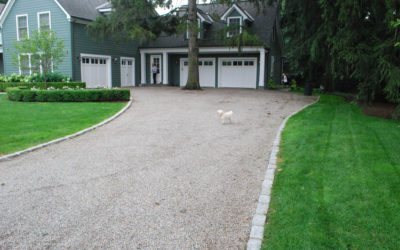
A larger amount of gravel will be needed under the pavers for a driveway. This area will be more heavily trafficked than a patio by heavier objects, like vehicles.
A gravel driveway is typically built from 2 stone layers: a base coat and a top coat. This combination of material is essential to the strength, integrity, and longevity of the driveway.
Residential driveways should have 4 inches of gravel while commercial load areas with heavy trucks will need 6-8 inches.
One of the most common types of gravel for a driveway’s foundation layer is #2 limestone gravel. These angular rocks pack best and are able to form a solid and dependable foundation while providing adequate drainage.
There are two types of popular gravel for the driveway’s topcoat.
A stone like #57 limestone which is typically about ¾-inch in size, is recommended for flat driveways. This crushed layer forms an ideal substrate that allows water to drain efficiently without carrying pieces of gravel with it. Dense grade aggregate is recommended for the top coat if you have a hilly driveway. It packs well and is useful under pavers.
With a firm gravel foundation, pavers will provide a secure area to drive on, allow for optimal drainage, and distribute the weight of vehicles properly on the driveway.
Bray’s Gravel Calculator
Bray makes it easy to scope your paver projects and determine how much gravel you need.
Explore our gravel calculator to learn more.
—
Bray Topsoil & Gravel has been providing the Greater Cincinnati area with quality natural topsoil delivery for 25+ years.
Interested in our services? Request a quote online or call 859-635-5680 today!