Holding Your Landscaping in Place
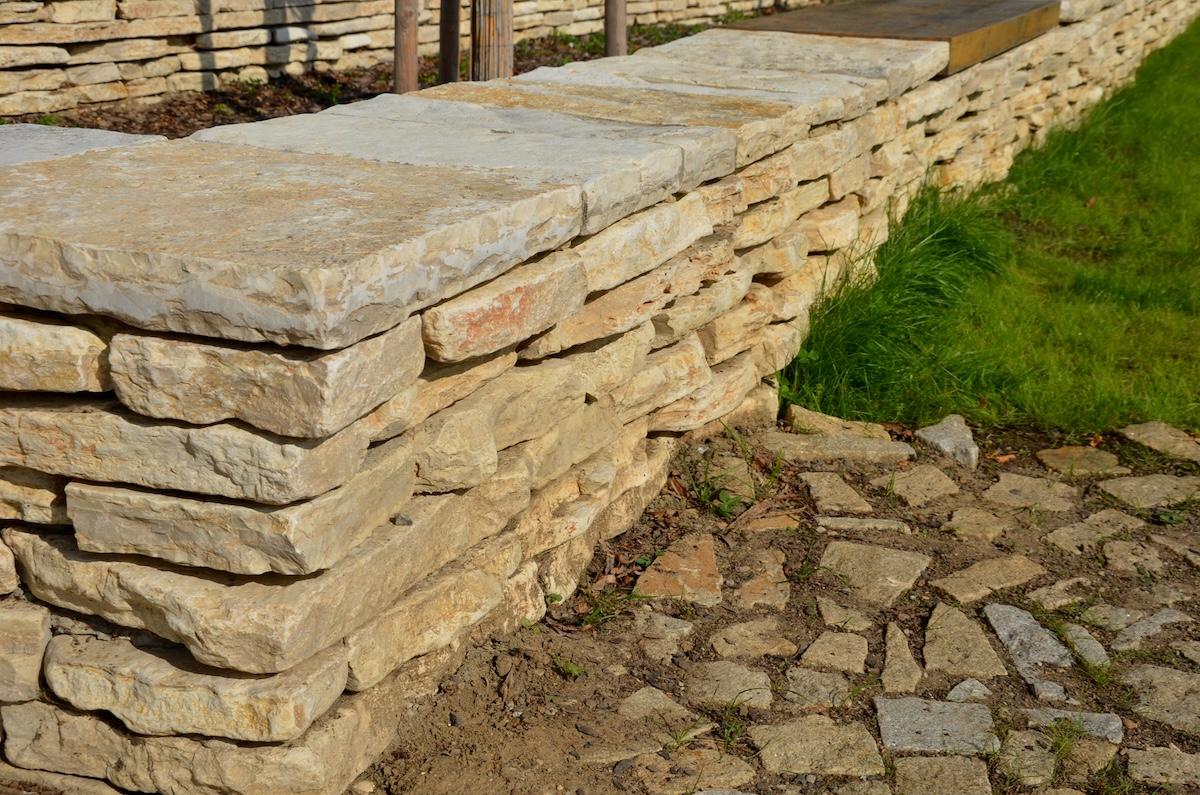
If you’re looking to upgrade your landscaping, consider installing gravel retaining walls with good drainage.
Retaining walls can serve both a functional and an aesthetic purpose.
They can stabilize your landscaping by preventing erosion from rain or gravity, and they hold rocks, soil, and plants in place. Retaining walls also provide structure for leveled areas if your terrain is uneven.
What Makes a Strong Retaining Wall?
When building a retaining wall on your property, there are two important factors to consider: stability and drainage.
Retaining walls must be strong enough to withstand the weight of soil and water, so the proper drainage capabilities are important. When water does not have a path, it will saturate the soil and put force on the retaining wall. This is known as hydrostatic pressure.
Allowing water to flow through without too much resistance is key to building a stable retaining wall. Water can move through gravel more quickly than it can move through soil. Gravel drainage prevents pooling and saturation, allowing your wall to dry out and maintain its integrity.
What Gravel Size Works Best for Retaining Wall Drainage?
It’s important to choose the right type of gravel for optimal retaining wall drainage. The size, cut, and porosity of the gravel will make or break your retaining wall’s structure.
In order to encourage drainage while also maintaining stability, use #57 Limestone for your retaining wall. This stone option forms an ideal substrate that allows water to drain efficiently without carrying pieces of gravel with it.
When cut into angular pieces, the crushed stone interlocks together, providing the sturdiness necessary for a retaining wall. Even though the stone pieces are secured, the spaces between the rocks still allow water to flow through.
Soil, on the other hand, becomes more compact as water flows through it with nowhere to go. Choosing the right gravel for your retaining walls will prevent erosion, pooling, and collapse.
Gravel You Should Avoid for Retaining Walls
When determining the right material for your retaining wall, it’s important to avoid certain gravel cuts.
Pea gravel, for example, is too small and round for the purpose of a retaining wall. Because the stones are smooth and not cut at an angle, they won’t lock together. The loose, small stones will be easily carried by water and give way when faced with hydrostatic pressure.
It’s also wise to avoid Crush Stone Base and other powder-like gravels. This type of gravel does not offer the drainage required for an effective retaining wall and is better for different purposes, like the base of a driveway. The fine consistency of Crush Stone Base will cause clogging when it encounters water, and the compaction will trap water behind the wall. This type of gravel will contribute to hydrostatic pressure.
Bray’s Gravel Calculator
Bray makes it easy to scope your retaining wall project and determine how much gravel you need.
Explore our gravel calculator to learn more.
—
Bray Topsoil & Gravel has been providing the Greater Cincinnati area with quality natural topsoil delivery for 25+ years.
Interested in our services? Request a quote online or call 859-635-5680 today!